Data Analysis Project
Comprehensive Analysis of BMW Auction Data
Analysis of used car listings to identify key price drivers and build a predictive model.
Project Background and Overview
Car auctions are a popular way to purchase vehicles at prices lower than market value. At one point, I considered buying a BMW F30 from an auction but found myself uncertain about the average price, the best locations to purchase from, and other key factors. Lacking knowledge about the auction process, I decided to leverage my data analysis skills to better understand how BMW vehicles perform in auctions.
This project was implemented using Python frameworks such as BeautifulSoup, Selenium, Pandas, Matplotlib, Seaborn, Plotly, and SkLearn. The data was pulled from external source. During the process and at the analysis stage, the structure of pages has changed, so scrapping code may no longer function as expected. The dataset contains 1280 samples.
Objectives
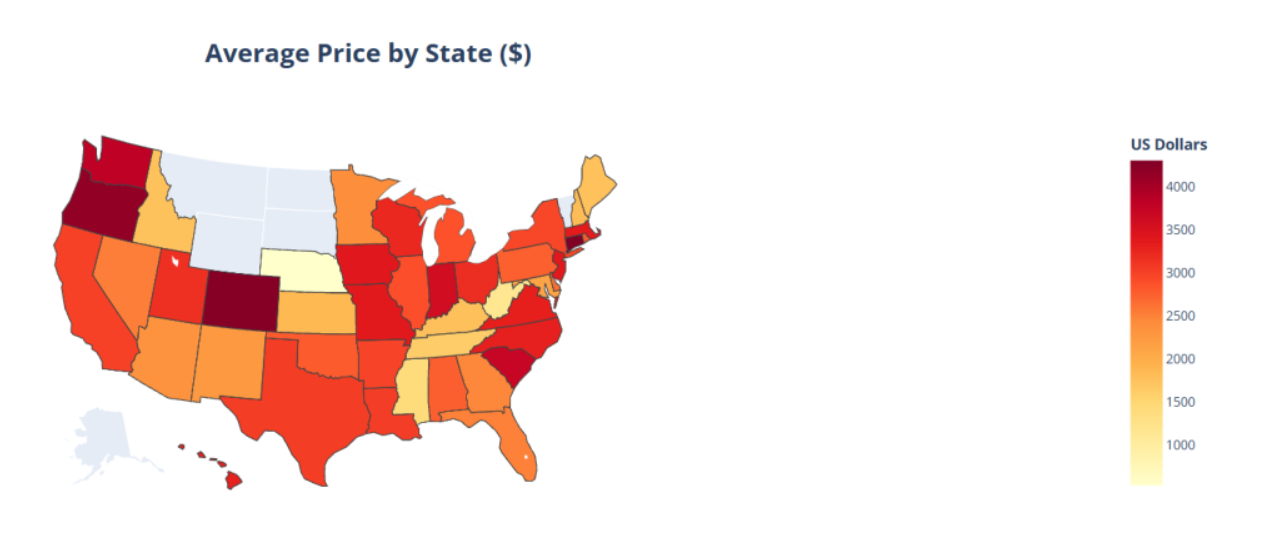
- Best Locations for Vehicles: Determine which states or locations offer the best vehicles based on average price, year, and mileage.
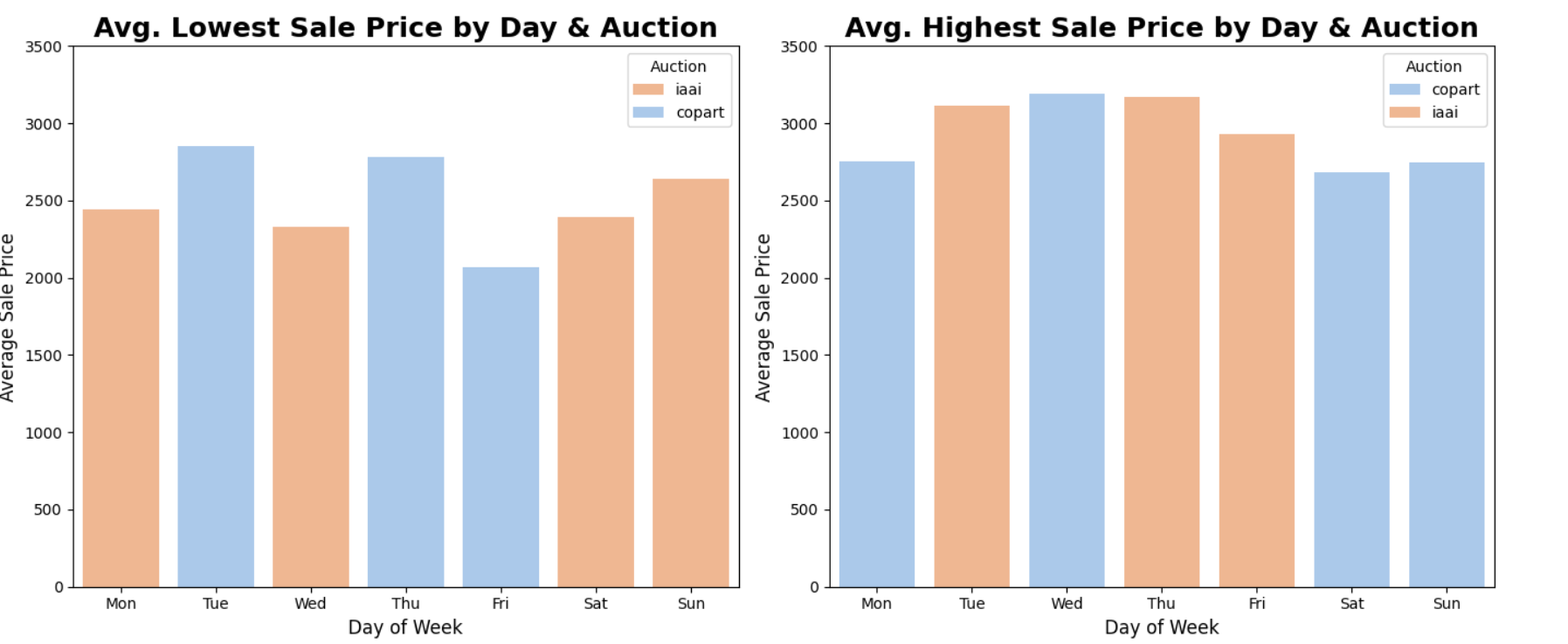
- Best Day to Purchase a Vehicle: Analyze trends to identify the most favorable day for buying a vehicle.
- Auction Bidding vs. Buy Now Option: Assess whether bidding at auctions provides better deals compared to the "Buy Now" option.
- Optimal Trim-Year-Mileage-Price Combination: Identify the best balance of trim, year, mileage, and price.
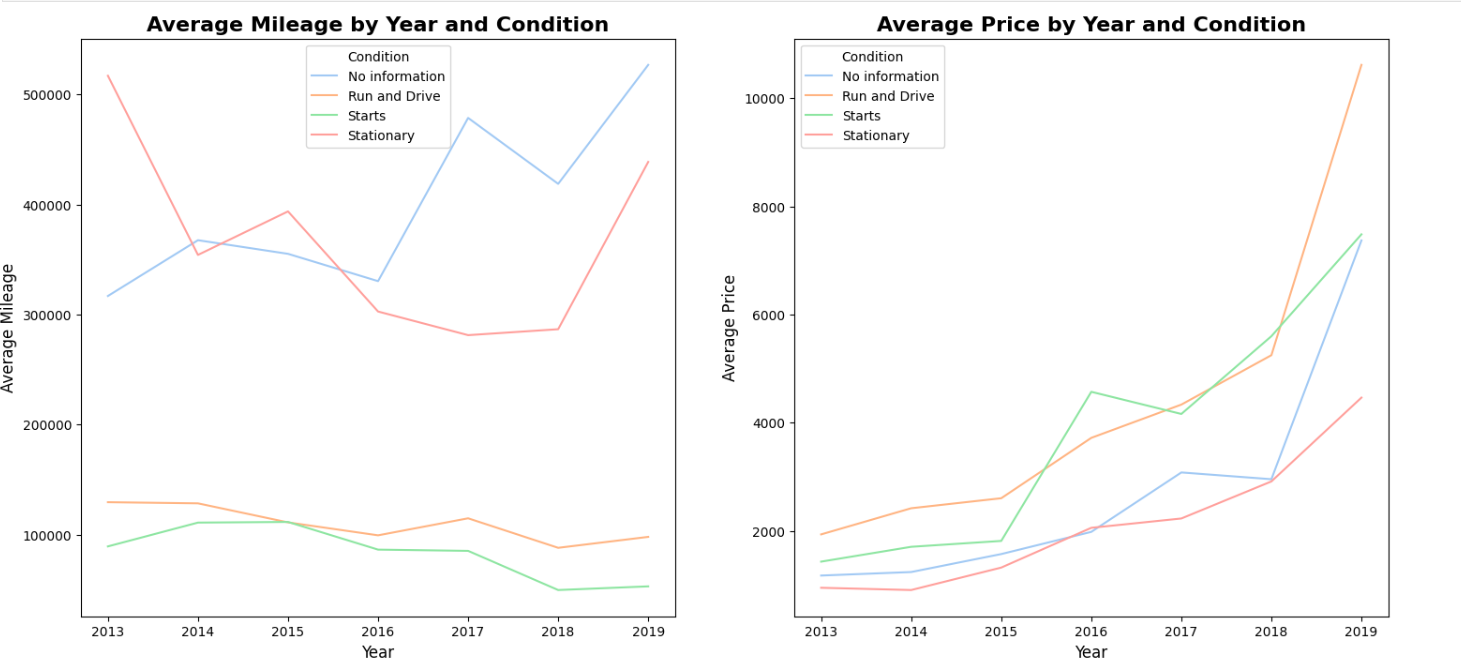
- Condition vs. Mileage Correlation: Examine whether higher mileage reduces the likelihood of a vehicle being in a "Run and Drive" condition.
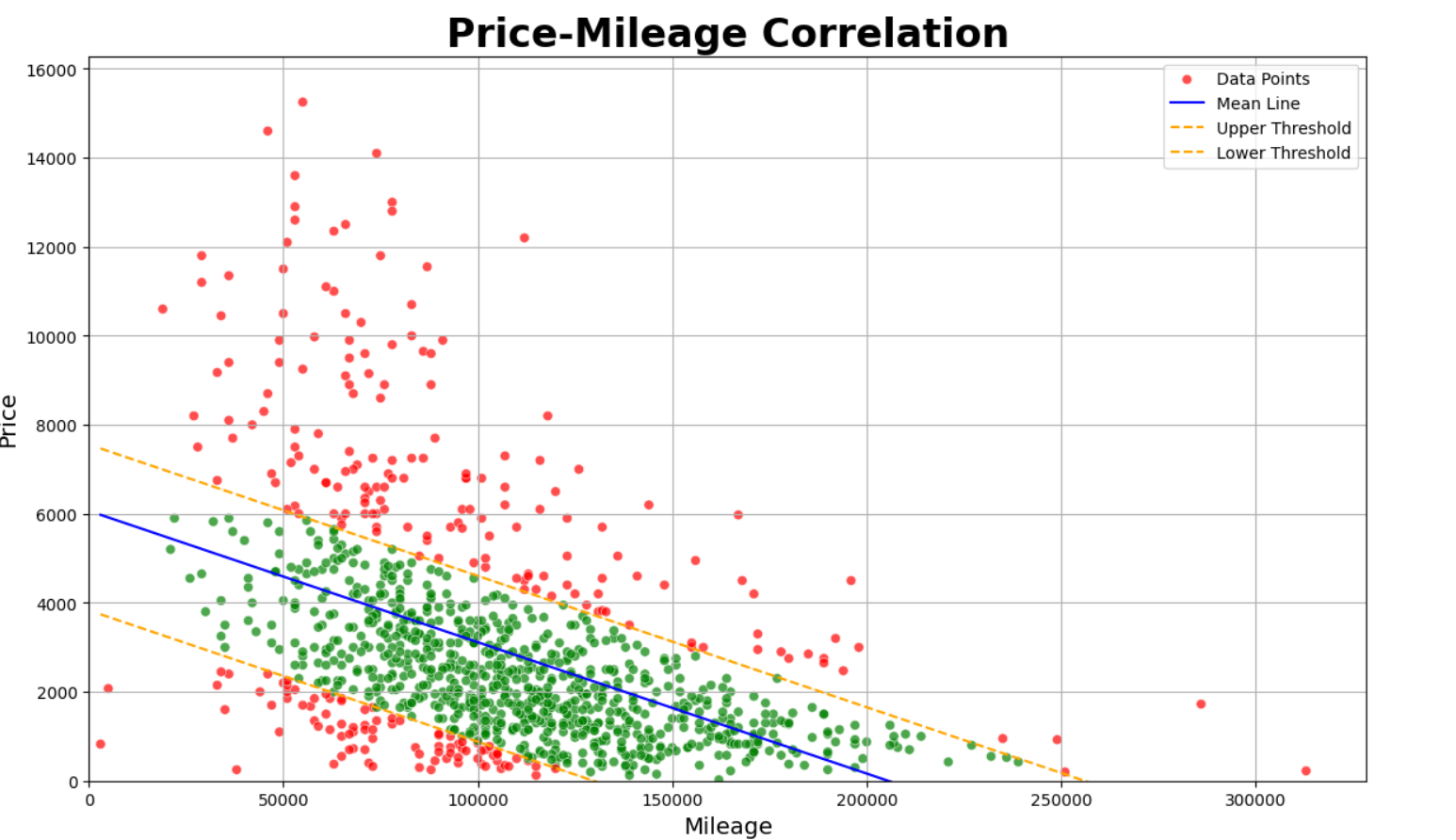
- Correlation Analysis: Explore relationships between damage, trim, mileage, and price to understand their impact on vehicle valuation.
Data Description
A fully custom dataset built from scratch. Detailed auction car sales, independently gathered from bid.cars/en/. See code here
- VIN - the unique vehicle identification;
- Trim - the specific model variant of the vehicle;
- Year - the manufacturing year of the vehicle;
- Mileage - the total distance traveled by the vehicle;
- Auction Name - the name of the auction (IAAI or Copart);
- State - the U.S. state in which the auction took place;
- Condition - the overall condition of the vehicle as assessed during the auction;
- Damage Type - the type of damage the vehicle has sustained;
- Damage Location - the specific area or part of the vehicle that was damaged;
- Auction Type - indicates whether the auction was a "Buy Now" or "Bidding" type;
- Date of Sale - the date on which the vehicle was sold at auction;
- Day of Sale - the specific day of the week on which the vehicle was sold;
- Seller - the entity or individual who listed the vehicle for sale at the auction;
- Price - the final sale price of the vehicle at auction.
Key Takeaways
This analysis encompassed a comprehensive evaluation of auctioned BMW vehicles, utilizing various visualizations and key insights to discover trends and optimal purchasing strategies. Some of the variables were not used, due to lack of information, some were not used due to the complexity of the analysis it could bring; however, the remaining dataset provided meaningful insights. For instance, Damage Type was omitted due to a high prevalence of “No Information” values, which would have compromised accuracy. Similarly, Trim was not incorporated, as it would have significantly reduced the sample size within each category, limiting the reliability of conclusions.
- Optimal States for Purchase: Kentucky, Nevada, Florida, and Arizona offer the most favorable conditions for purchasing auctioned vehicles, as they tend to have lower prices relative to mileage and a higher proportion of Run and Drive vehicles, particularly from model year 2015.
- Vehicle Condition: Among all conditions, Run and Drive is the most desirable, as it maintains a stable price-to-mileage ratio, dominates the dataset, and generally indicates fewer mechanical issues.
- Best Days for Cost-Effective Purchases: Sundays present the best opportunity to explore both major auctions, Copart and IAAI, as their pricing structures are nearly identical. On Wednesdays and Fridays, favorable deals may be found in only one of the auctions, while on other weekdays, the prices vary moderately between the two auctions, so it's a matter of identifying the best deal.
- Auction Bidding vs. Buy Now Option: The Buy Now option appeals to buyers who prioritize price certainty, while the Auction format is more suited for those willing to accept price fluctuations in pursuit of a better deal.
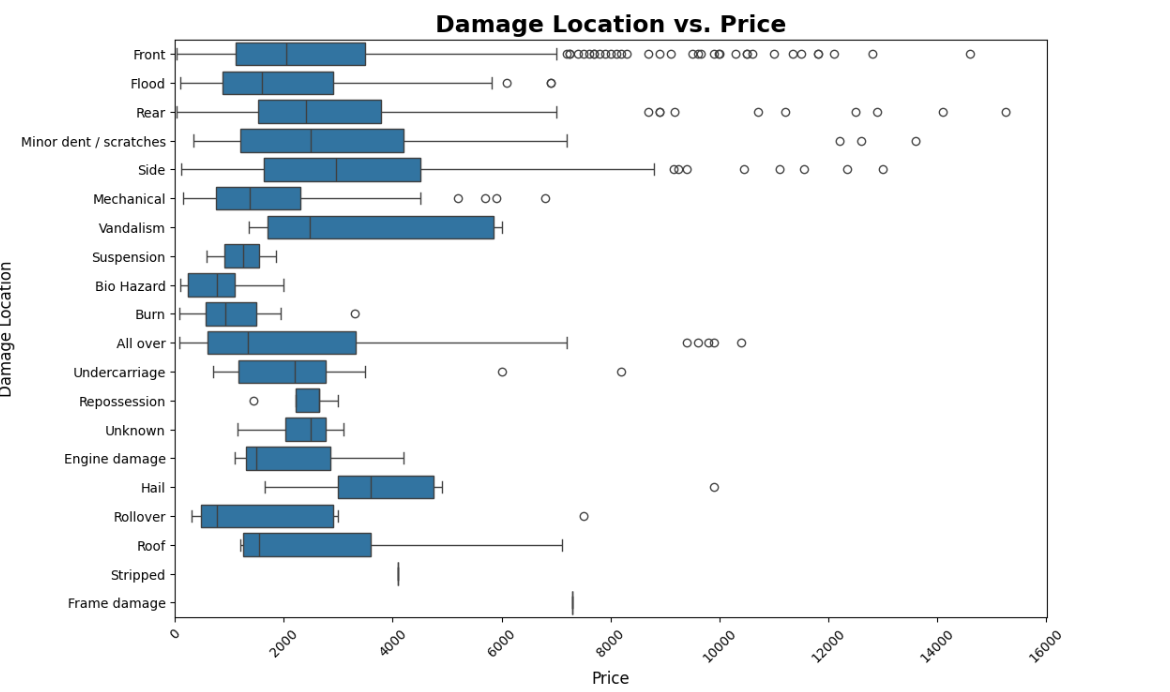
- Impact of Damage Location on Pricing: Damage location can be a significant factor in vehicle's price, but among all of the locations, dents/scratches and front damage are two the most reliable. Most of the cars come with front damage, however cars with normal wear (only has dents and scratches) usually have similar average price, making them a preferred option.
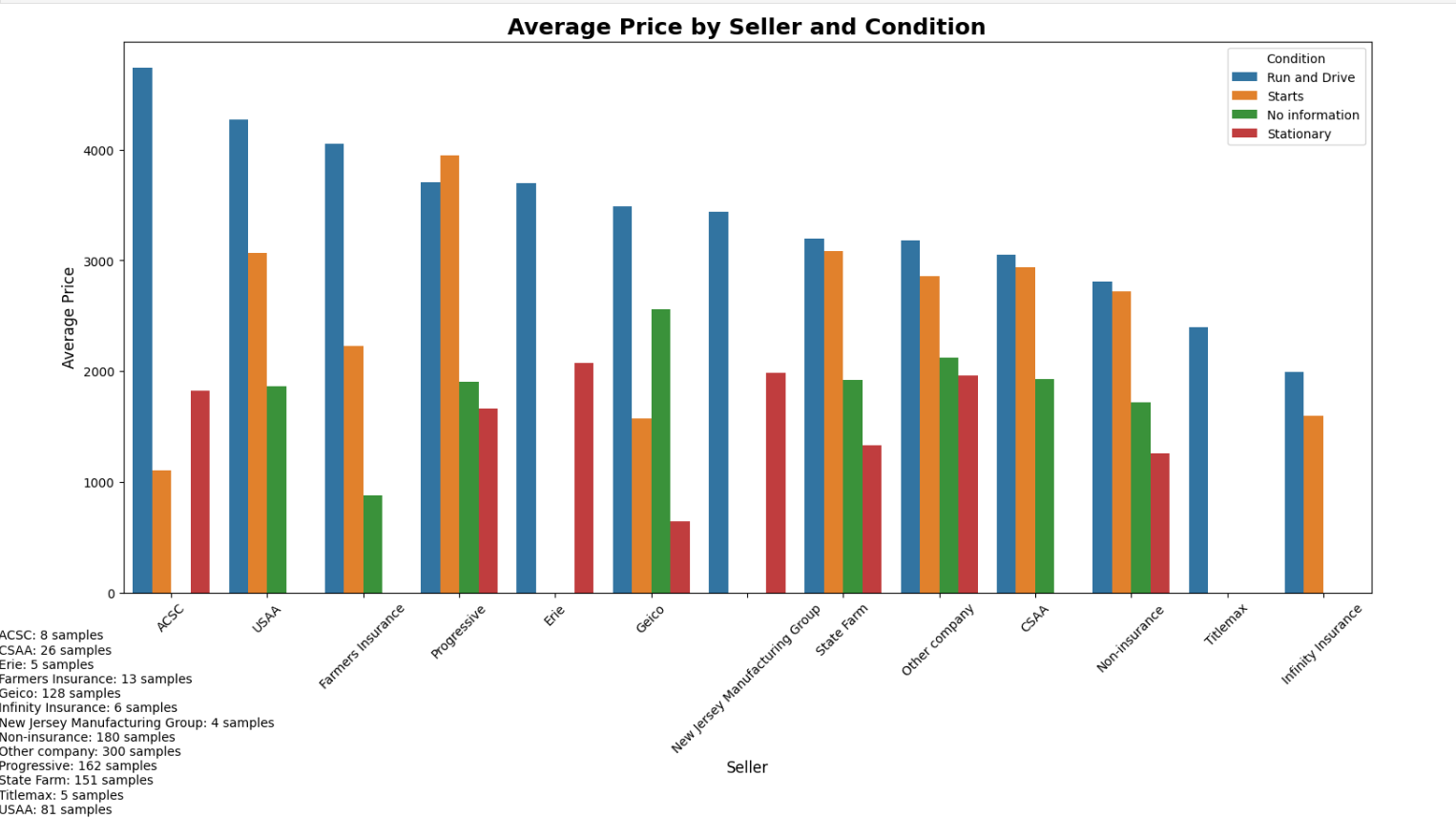
- Insurance Provider Influence: Vehicles from the Non-insurance category are priced lower than the insurance providers mentioned in analysis; however, this category presents higher risks, as there may be hidden issues with the vehicles. As such, we did not consider this category. The most favorable insurance providers, based on pricing and vehicle condition, include State Farm, CSAA, some minor insurance companies, and Geico (specifically for vehicles categorized as Starts).
Conclusion
From identifying the best states for vehicle purchases to pinpointing the most cost-effective auction days, we've established clear strategies for making informed decisions. Additionally, understanding the impact of vehicle condition, auction methods, and insurance providers has further refined our approach to evaluating auctioned cars. Ultimately, buying a vehicle at auction involves balancing risks and rewards. By leveraging these insights, buyers can navigate the market more confidently, securing the best deals while minimizing uncertainties. Whether prioritizing affordability, reliability, or long-term value, our findings serve as a valuable guide for making the most out of BMW auctions.
This project significantly improved my skills in web scraping, data analysis, and visualization, allowing me to extract meaningful insights from real-world auction data. This is the big step up in my analytics road, as now I will be able to acquire data from the sources that really interest me. While I ultimately did not purchase a BMW F30, this analysis helped me successfully acquire another vehicle through an auction.